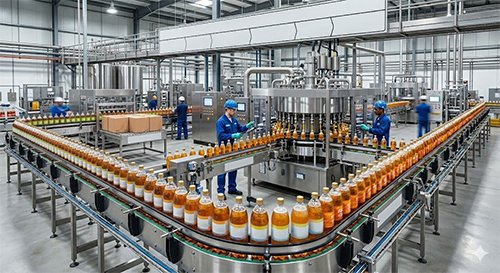
The beverage industry has experienced rapid growth over the past decade, creating a strong demand for efficient, hygienic, and high-speed beverage production systems. From soft drinks and flavored sodas to sparkling beverages and carbonated water, manufacturers require advanced machinery capable of delivering consistent quality and large-scale production. This is where a modern soda bottling plant becomes essential.
A well-designed beverage bottling plant combines automation, carbonation technology, filling systems, and packaging solutions into a streamlined production line. Whether you are a startup beverage brand or an established soft drink manufacturer, investing in the right automatic soda plant can significantly improve productivity, product consistency, and operational efficiency.
In this detailed guide, we will explore everything you need to know about soda bottling plants, including their working process, major machinery, production systems, automation advantages, and future trends in beverage manufacturing.
Introduction to Soda Bottling Plants
A soda bottling plant is an integrated industrial setup designed for the production, carbonation, filling, capping, labeling, and packaging of carbonated beverages. These plants are widely used in the soft drink, flavored beverage, soda water, and sparkling drink industries.
Modern bottling systems are engineered to:
- Maintain carbonation consistency
- Ensure hygienic beverage processing
- Increase production speed
- Reduce wastage
- Improve filling accuracy
- Support multiple bottle types
The complete soda production line typically includes:
- Water treatment systems
- Syrup preparation tanks
- Carbonation units
- Bottle washing machines
- Filling machines
- Capping systems
- Labeling machines
- Shrink packaging equipment
- Conveyor systems
Today’s advanced carbonated drink plant solutions are available in both semi automatic and fully automatic configurations depending on production requirements and business scale.
How Soda Bottling Plants Work
The working process of a soda bottling plant involves several carefully synchronized stages to ensure beverage quality, carbonation stability, and hygienic packaging.
Step-by-Step Soda Production Process
- Water Treatment
The process begins with water purification using RO plants, filtration systems, UV treatment, and softening units. High-quality purified water is critical for beverage consistency.
- Syrup Preparation
Flavor concentrates, sugar syrup, preservatives, and additives are mixed in blending tanks according to beverage formulation standards.
- Chilling Process
The beverage mixture is cooled before carbonation because cold liquid absorbs CO₂ more effectively.
- Carbonation
The chilled beverage is transferred into the carbonation unit where carbon dioxide is injected under controlled pressure.
- Bottle Washing
Empty bottles are thoroughly cleaned and sterilized using bottle washing machines to maintain hygiene standards.
- Filling Operation
The soft drink bottling machine fills the carbonated beverage into PET or glass bottles with precise volume control.
- Bottle Capping
Caps are automatically sealed to maintain carbonation pressure and prevent leakage.
- Labeling & Coding
Labels, batch numbers, and manufacturing details are applied to bottles.
- Packaging
Finished bottles are shrink wrapped or packed into cartons for transportation and distribution.
Main Machines Used in Beverage Production
A modern beverage bottling plant consists of several interconnected machines working together for smooth operation.
Machine | Function |
RO Water Treatment Plant | Purifies water for beverage production |
Syrup Mixing Tank | Prepares flavored beverage mixture |
Carbonation Unit | Injects CO₂ into beverages |
Bottle Washing Machine | Cleans and sterilizes bottles |
Soda Filling Machine | Fills beverages accurately |
Capping Machine | Seals bottles securely |
Labeling Machine | Applies product labels |
Shrink Wrapping Machine | Packs bottles for dispatch |
Conveyor System | Transfers bottles between machines |
Air Compressor | Supports pneumatic operations |
These machines are customized according to:
- Production capacity
- Bottle size
- Beverage type
- Factory layout
- Automation level
Automatic vs Semi Automatic Systems
One of the most important decisions in beverage manufacturing is choosing between a semi automatic and fully automatic soda bottling plant.
Comparison Table
Feature | Semi Automatic Plant | Fully Automatic Plant |
Production Speed | Moderate | High |
Labor Requirement | Higher | Lower |
Automation Level | Partial | Complete |
Production Accuracy | Moderate | Excellent |
Operational Efficiency | Medium | High |
Maintenance Complexity | Lower | Moderate |
Initial Investment | Lower | Higher |
Suitable For | Small Businesses | Large Production Units |
Semi Automatic Soda Plants
Semi automatic systems are suitable for:
- Small beverage startups
- Limited production requirements
- Budget-conscious businesses
These plants require manual bottle handling at certain stages.
Fully Automatic Soda Plants
Fully automatic systems are designed for:
- High-volume beverage production
- Large-scale commercial operations
- Continuous manufacturing
These systems minimize human intervention and improve overall efficiency.
PET Bottle vs Glass Bottle Production
Soda bottling plants can be configured for both PET bottles and glass bottles.
PET Bottle Advantages
- Lightweight
- Lower transportation cost
- Shatter resistant
- Suitable for high-speed production
- Cost effective packaging
Glass Bottle Advantages
- Premium product appearance
- Better carbonation retention
- Reusable packaging option
- Eco-friendly recycling
Which Is Better?
The ideal choice depends on:
- Target market
- Brand positioning
- Production budget
- Distribution network
Many modern bottling plants support both PET and glass bottle production lines.
Benefits of Automated Beverage Plants
Automation has transformed modern beverage manufacturing by improving consistency, speed, and operational reliability.
Major Benefits of Automatic Soda Plants
Higher Production Speed
Automated systems handle large production volumes efficiently.
Reduced Labor Dependency
Automation reduces manual handling and workforce requirements.
Better Filling Accuracy
Advanced filling systems maintain consistent bottle volume.
Improved Hygiene Standards
Minimal human contact reduces contamination risks.
Lower Beverage Wastage
Precise machine synchronization reduces product loss.
Continuous Production
Automated plants support uninterrupted operation.
Scalability
Production capacity can be increased easily with modular upgrades.
Applications Across Beverage Industries
A modern carbonated drink plant is used in multiple beverage sectors.
Common Applications
Soft Drink Manufacturing
Used for cola, orange soda, lemon drinks, and flavored beverages.
Soda Water Production
Ideal for packaged soda water manufacturing.
Sparkling Beverage Industry
Used for sparkling fruit drinks and flavored sparkling water.
Energy Drink Manufacturing
Supports carbonated energy beverage production.
Hospitality & Commercial Beverage Supply
Hotels, restaurants, and commercial beverage brands rely on bottling plants for large-scale supply.
Choosing the Right Plant Capacity
Selecting the right plant size is crucial for business profitability and operational efficiency.
Factors to Consider
Production Demand
Estimate daily and monthly beverage demand.
Bottle Sizes
Different bottle capacities affect production speed.
Future Expansion
Choose scalable systems for future growth.
Factory Space
Plant layout must support machine installation and workflow.
Budget Planning
Consider machinery, utilities, labor, and maintenance costs.
Common Plant Capacities
Plant Type | Production Capacity |
Small Scale Plant | 10–20 BPM |
Medium Scale Plant | 30–60 BPM |
Large Automatic Plant | 100+ BPM |
(BPM = Bottles Per Minute)
Future Trends in Soda Manufacturing
The beverage industry is rapidly evolving with advanced automation and smart manufacturing technologies.
Emerging Trends
Smart Automation
PLC and sensor-based monitoring systems improve operational efficiency.
Energy Efficient Systems
Modern plants reduce electricity and water consumption.
IoT Integration
Remote machine monitoring helps reduce downtime.
Sustainable Packaging
Eco-friendly bottle solutions are becoming more popular.
Touchscreen Control Panels
Advanced interfaces simplify machine operation.
AI-Based Production Monitoring
Artificial intelligence improves production accuracy and predictive maintenance.
Compact Modular Plants
Space-saving beverage production systems are gaining popularity among startups.