
The demand for purified, packaged drinking water is a constant in the modern beverage industry. However, the path from an idea to a profitable bottling unit is often cluttered with generic advice. For entrepreneurs, the true challenge is not just choosing a machine; it is designing a production ecosystem that balances operational costs with long-term output quality.
At Dada’s Soda, we have spent four decades witnessing how local bottling units in regions like Ahmedabad thrive—or falter. The difference rarely comes down to the machine alone; it comes down to the strategic configuration of the plant.
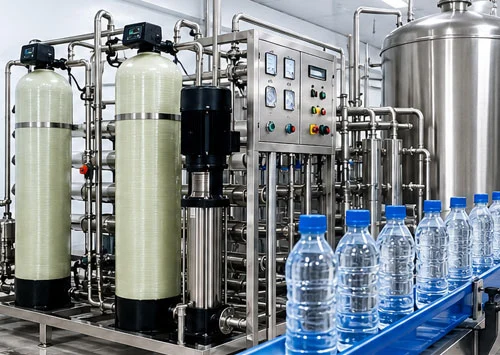
The Foundation: Why Configuration Triggers ROI
When planning a mineral water plant, many investors prioritize “bottles per minute” above all else. While throughput is important, your Return on Investment (ROI) is primarily determined by efficiency and waste management.
An oversized system for a small market creates unnecessary electricity and maintenance overhead, while an undersized system forces constant overtime and machine wear. The most successful plants we have helped set up are those that match their purification capacity exactly to their localized distribution radius. Before investing, perform a thorough analysis of your target market’s daily demand to avoid the “idle machine” trap.
The Technical Edge: Prioritizing Water Quality and System Longevity
The heart of your plant is the purification system. In our experience, the specific water profile of your area dictates the longevity of your RO membranes. If your incoming water has high hardness or specific mineral imbalances, a standardized system will struggle, leading to frequent membrane fouling and expensive downtime.
By integrating a pre-treatment setup tailored to your local water quality, you protect your core equipment. This is where the Dada’s Soda difference comes in—our engineers focus on custom fluid dynamics and filtration stages that reduce the pressure on your primary RO system. This isn’t just about water quality; it is about extending the lifespan of your mechanical assets by years, significantly lowering your Total Cost of Ownership (TCO).
Operational Excellence: The Bottleneck Theory
In any water bottling unit, your filling speed is only as fast as your slowest component. Often, entrepreneurs invest in a high-speed filler but fail to optimize their bottle blowing or cap-sealing stations. This creates a bottleneck that limits your actual daily output.
We recommend a balanced approach:
- Flow Integration: Ensure your conveyor systems and filling stations are synced to prevent product pile-up.
- Maintenance Discipline: A plant that is cleaned and serviced regularly has a significantly higher resale and operational value. We often advise our clients to treat their Annual Maintenance Contract (AMC) as an insurance policy, not an expense.
Achieving Long-Term Scalability
Sustainability in the beverage industry is now a business necessity. Modern units that incorporate water-saving technologies not only comply with environmental regulations but also reduce raw water sourcing costs.
As you look to scale, remember that your facility design should allow for “plug-and-play” upgrades. When you choose a modular plant design, you can increase your capacity by adding components rather than replacing your entire line. This modularity is the secret to scaling from a regional supplier to a major market player without a total capital re-investment.
Final Thoughts: The Path Forward
Investing in a mineral water plant is a commitment to quality and consistency. By focusing on site-specific water treatment, balanced production lines, and modular growth, you position your brand for lasting success.
If you are currently evaluating your plant layout or looking to optimize your existing setup, we encourage you to look beyond the brochure specifications. Focus on the total production environment.
 Users Today : 7
 Users This Month : 1336
 Total Users : 1337