
In industrial water purification, the choice of material for your pressure vessels and storage units dictates your long-term maintenance overhead. While traditional metal systems often fall victim to corrosion and chemical degradation when handling high-salinity or chemically treated water, Fiber Reinforced Plastic (FRP) has emerged as the definitive industrial standard.
At Dada’s Soda, we understand that industrial buyers do not just look for initial setup costs; they calculate Total Cost of Ownership (TCO). Designing a reliable water treatment line requires looking past standard specifications and focusing on how material resilience and proactive care dictate plant longevity.
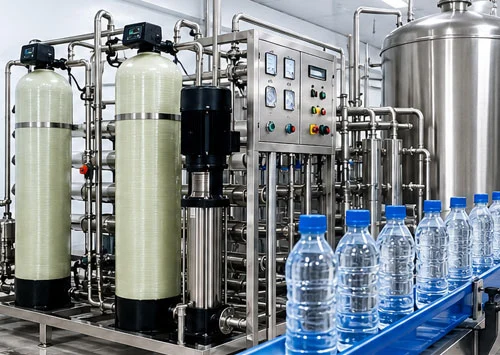
The Material Advantage: Why FRP Outperforms Metal in Corrosive Environments
The primary threat to any industrial reverse osmosis system is environmental degradation. High Total Dissolved Solids (TDS), acidic pre-treatment chemicals, and humid factory floor conditions can rapidly corrode standard steel components.
FRP vessels provide an inherent engineering advantage because they are structurally immune to rust and electrochemical corrosion. This makes an FRP RO plant exceptionally well-suited for regions facing severe water hardness or high saline content. By eliminating internal oxidation risks, you prevent particulate contamination from entering the water stream, ensuring that your purified output maintains consistent quality right from the primary filtration stage.
The Technical Edge: Preventing Membrane Fouling
Even the most corrosion-resistant tank cannot protect your system if internal membrane fouling occurs. Membrane scaling is the silent profit-killer in industrial RO plants, increasing energy consumption as high-pressure pumps work harder to push water through blocked pores.
To maximize membrane lifespan:
- Optimize Pre-Treatment: Ensure your multi-grade filters and chemical dosing systems are precisely tuned to the incoming water profile before it hits the RO membranes.
- Monitor Pressure Differentials: Keep a strict log of feed pressure versus reject pressure. A rising differential is your earliest warning sign of scaling.
- Scheduled Cleaning in Place (CIP): Never wait for output volume to drop drastically. Implement a routine CIP protocol using appropriate cleaning agents to strip organic and mineral scaling safely.
Operational Discipline: Reducing Energy Overhead
An industrial RO system runs continuously, meaning electrical consumption constitutes a major portion of your operational budget. When filtration stages are neglected, pumps operate under unnecessary strain, driving up monthly power bills.
A well-maintained FRP RO setup maintains optimal hydraulic flow dynamics. Pairing your system with accurate monitoring gauges ensures that your high-pressure pumps operate within their optimal efficiency curves. Treating maintenance as a scheduled operational discipline rather than an emergency response ensures zero unexpected downtime on your factory floor.
Integrating Your Water Treatment Ecosystem
An industrial water plant rarely operates in isolation. Whether you are supplying purified water as an end product or feeding it directly into a high-capacity bottling line, your water treatment setup must synchronize seamlessly with your broader production workflow.
Designing a modular plant layout ensures that as your business scales, you can expand your filtration capacity by integrating secondary FRP units without dismantling your primary infrastructure.
Final Thoughts: Securing Your Industrial Asset
Investing in a robust water purification system is the backbone of any reliable beverage or manufacturing unit. By prioritizing corrosion-resistant materials like FRP and maintaining strict anti-fouling protocols, you protect your capital investment and ensure uninterrupted output.
 Users Today : 7
 Users This Month : 1336
 Total Users : 1337