
An RO system for packaged drinking water can be one of the most important treatment stages in a commercial water production facility. However, selecting an RO plant involves much more than choosing a machine based on litres per hour.
Feed-water quality, pretreatment, membrane configuration, recovery, operating pressure, required treated-water quality and downstream bottling demand can all influence the final system design.
For a business planning packaged drinking water production, understanding these factors helps answer a much more useful question than simply “Which RO plant should I buy?”
The better question is:
What RO configuration is appropriate for my source water and production requirement?
This guide explains the role of reverse osmosis, how it fits into the broader water treatment process, and what buyers should evaluate before finalizing a system.
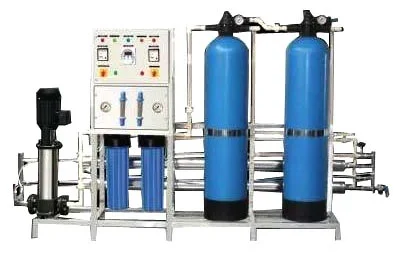
Quick Answer: What Does an RO System Do?
Reverse osmosis uses pressure and a semi-permeable membrane to separate water from a significant portion of dissolved substances present in the feed stream.
In a packaged drinking water facility, an RO system may be used as part of a broader treatment sequence that can include:
- Raw-water storage
- Pretreatment
- Media filtration
- Activated carbon filtration
- Micron filtration
- Membrane treatment
- Disinfection
- Hygienic treated-water storage
- Bottling
RO should therefore be viewed as one part of a complete treatment strategy, rather than a standalone solution for every possible water-quality issue.
Where Does RO Fit Into the Water Treatment Process?
RO generally appears after suitable pretreatment.
A simplified production flow may look like this:
Raw Water → Pretreatment → Media Filtration → Activated Carbon Treatment → Micron Filtration → RO System → Disinfection → Treated Water Storage → Bottling
The actual process can differ according to raw-water characteristics and required finished-water specifications.
For a broader explanation of each treatment stage, read our step-by-step mineral water plant process guide.
That article explains the complete journey from raw-water assessment through purification and preparation for bottling, while this guide concentrates specifically on reverse osmosis.
How Does Reverse Osmosis Work?
Reverse osmosis is a membrane separation process.
Feed water is supplied to the membrane system under pressure. The membrane allows a portion of the water to pass through while retaining a significant portion of dissolved substances in a separate stream.
This generally produces two streams:
Permeate
The treated-water stream that passes through the membrane.
Concentrate
The stream containing a higher concentration of substances rejected by the membrane.
Understanding this distinction is important because the feed-water flow rate is not automatically equal to the final treated-water output.
That difference affects capacity calculations and overall water management.
Why Is Raw-Water Analysis Important Before Selecting RO?
This is one of the most important purchasing considerations.
Water from different sources can have very different characteristics.
A proper analysis may evaluate parameters such as:
- TDS
- Hardness
- pH
- Turbidity
- Iron
- Silica where relevant
- Chlorides
- Alkalinity
- Microbiological condition
- Other source-specific parameters
These results help determine what treatment should happen before the water reaches the membrane.
Buying an RO system before understanding the feed water is a little like ordering prescription glasses before checking your eyesight. The equipment may exist, but the specification is missing.
Why Pretreatment Matters
RO membranes are sensitive components.
Feed water that contains excessive suspended matter, scaling potential, oxidants or other problematic constituents can affect membrane performance and operating life.
Pretreatment is designed to prepare water for membrane treatment.
Depending on source-water characteristics, the pretreatment section may include technologies such as:
- Media filtration
- Activated carbon filtration
- Softening or antiscalant strategy where appropriate
- Chemical conditioning
- Micron filtration
- Other source-specific treatment
The exact configuration should follow water analysis and process requirements.
Pretreatment Is Not an Optional Accessory
Buyers sometimes focus heavily on the RO membrane brand or nominal capacity while paying less attention to pretreatment.
That can be a mistake.
Membrane performance depends partly on the condition of the water reaching it.
A well-selected membrane operating behind inadequate pretreatment can still experience avoidable operational problems.
What Does TDS Mean in RO Treatment?
TDS stands for Total Dissolved Solids.
It represents the concentration of dissolved substances present in water, usually reported in milligrams per litre or parts per million under common water-testing conventions.
Reverse osmosis can substantially reduce many dissolved ionic substances, although actual rejection depends on:
- Membrane type
- Feed-water composition
- Pressure
- Temperature
- Membrane condition
- System configuration
Buyers should avoid assuming that a particular RO system will always produce exactly the same outlet TDS regardless of feed-water conditions.
The inlet water matters.
Understanding RO Capacity
Commercial RO systems are commonly described using production ratings such as:
- 500 LPH
- 1000 LPH
- 2000 LPH
Higher customized capacities
LPH means litres per hour.
However, nominal capacity alone does not tell you everything about the system.
When comparing proposals, ask:
- What feed-water quality was assumed?
- What treated-water output is expected?
- At what operating conditions?
- What recovery has been considered?
- What pretreatment is included?
- Is the capacity suitable for actual daily production?
These questions make quotations easier to compare meaningfully.
RO Feed Flow vs Treated-Water Output
Suppose a business needs a specific amount of treated water every hour.
It cannot simply assume that supplying exactly that volume of raw water to the RO will produce the same quantity of permeate.
Some water exits through the concentrate stream.
Therefore:
Feed Water = Permeate + Concentrate
The actual relationship depends on system design and operating conditions.
This is why production planning should use realistic treated-water output rather than just pump or feed-flow ratings.
What Is RO Recovery?
What Is Membrane Rejection?
How Does RO Capacity Affect Bottling Production?
The RO plant and bottling line should be planned together.
Imagine a filling section capable of consuming treated water faster than the purification section can supply it.
Eventually, the bottling operation has to slow or stop unless adequate treated-water storage bridges the difference.
The reverse can also happen.
An oversized treatment section may continuously produce more water than the packaging operation requires.
Therefore, the production system should balance:
Treatment Capacity → Storage → Filling Capacity → Packaging Capacity
If you are deciding how much automation is appropriate downstream, see our automatic vs semi-automatic water plant comparison.
How to Calculate Required RO Capacity
Start with the finished product requirement.
For example, consider:
- Expected bottles per day
- Volume of each bottle
- Total packaged-water requirement
- Operating hours per shift
- Number of shifts
- Cleaning and process requirements
- Realistic plant utilization
- Treatment losses
- Future demand
From these figures, the engineering team can estimate the required treated-water production rate.
Simple Planning Example
If a facility expects to package 8,000 litres during an eight-hour production period, dividing 8,000 by eight gives an average finished-water demand of 1,000 litres per hour.
However, that does not automatically mean a nominal 1000 LPH RO system is the correct final selection.
Actual planning should also consider:
- Production peaks
- Storage
- Cleaning
- Downtime
- Treatment performance
- Expansion margin
- Operating schedule
This is why capacity should be calculated as a system rather than by a single division.
What Should Buyers Check in an RO Proposal?
When comparing systems from a mineral water plant manufacturer, avoid comparing only price and LPH.
Ask for clarity around the following areas.
Feed-Water Basis
What raw-water characteristics were used to design the system?
Pretreatment
Which pretreatment stages are included and why?
Membrane Configuration
How many membrane elements are used, and what operating conditions are assumed?
Pumping System
Is the pump selected for the required membrane pressure and flow?
Instrumentation
Which pressure, flow, conductivity or other monitoring instruments are provided?
Control System
Is operation manual, semi-automatic or automatic?
Cleaning Provision
How will membrane cleaning be carried out when required?
Treated-Water Storage
How will permeate be stored before downstream processing or bottling?
Service and Spare Parts
What maintenance support and replacement components are available?
This information gives buyers a much stronger basis for comparing two proposals.
RO System Components Buyers Should Understand
A commercial system may contain several functional components.
These can include:
- Feed pump
- Pretreatment equipment
- Cartridge filtration
- High-pressure pump
- Membrane housings
- RO membrane elements
- Flow meters
- Pressure gauges
- Conductivity/TDS monitoring
- Control panel
- Valves
- Piping
- Cleaning arrangement
- Treated-water transfer system
The exact equipment depends on the application.
For a broader look at equipment across the entire production facility, refer to our mineral water plant machinery guide.
Manual vs Automated RO Operation
Automation can also be applied within the treatment section.
Depending on system design, automation may assist with:
- Pump sequencing
- Tank-level control
- Low-pressure protection
- Automatic flushing
- Conductivity monitoring
- Alarm functions
- Valve operation
- System shutdown
Automation can make routine operation more consistent, but it does not eliminate the need for trained operators and preventive maintenance.
Common RO Problems Buyers Should Know About
Understanding common operational issues helps businesses evaluate maintenance requirements before purchasing equipment.
Membrane Fouling
Suspended or biological material can accumulate and reduce performance if pretreatment and operation are inadequate.
Scaling
Certain dissolved salts can become concentrated and form deposits under unsuitable operating conditions.
Pressure Changes
Unexpected pressure differences may indicate filter blockage, membrane issues or other hydraulic restrictions.
Reduced Permeate Flow
Possible causes include membrane fouling, scaling, temperature changes, pressure issues or membrane ageing.
Change in Treated-Water Quality
Changes in conductivity or TDS can signal operating, membrane or instrumentation issues that require investigation.
The correct response depends on the actual cause, so diagnosis should be based on operating data rather than guesswork.
How to Improve RO Operating Reliability
Reliable performance begins before the machine is installed.
- Good practices include:
- Test raw water periodically
- Use appropriate pretreatment
- Monitor operating pressure
- Record feed and permeate flow
- Monitor conductivity or TDS trends
- Replace cartridge filters when required
- Follow appropriate membrane cleaning procedures
- Prevent untreated water from bypassing required stages
- Maintain hygienic treated-water storage
- Keep operating records
Trend data is particularly valuable.
A single reading tells you what is happening now. A record of readings can show how the system is changing over time.
Should You Choose RO Capacity Based on Future Expansion?
Future demand deserves consideration, but simply purchasing the largest possible RO system is not always efficient.
Instead, consider whether the facility can be designed for expansion.
This may involve:
- Adequate utility provision
- Space for additional equipment
- Suitable piping arrangements
- Expandable treated-water storage
- Compatible bottling capacity
- Modular treatment design
This approach can provide flexibility without unnecessarily oversizing every component from day one.
Questions to Ask an RO System Supplier
Before finalizing equipment, ask:
- Have you reviewed our raw-water analysis?
- Why have you selected this pretreatment?
- What permeate output is expected under our feed conditions?
- What recovery is assumed?
- What membrane configuration is proposed?
- How will system performance be monitored?
- What happens if feed-water quality changes?
- What routine consumables are required?
- How is membrane cleaning performed?
- What treated-water storage capacity is recommended?
- Can the system be expanded later?
- How will the RO integrate with our bottling equipment?
These questions can reveal far more about a proposal than the quoted LPH figure alone.
RO System Selection Checklist
Before purchasing, confirm that you have:
- Raw-water laboratory analysis
- Finished-water requirements
- Daily production target
- Operating-hour estimate
- Required treated-water capacity
- Pretreatment design
- RO recovery assumptions
- Membrane specifications
- Instrumentation details
- Utility requirements
- Treated-water storage plan
- Bottling-line requirements
- Maintenance plan
- Expansion strategy
A quotation based on this information is more useful than one generated from capacity alone.
Frequently Asked Questions
Conclusion
An RO system for packaged drinking water should be selected as part of the complete production process, not as an isolated machine.
The most important starting point is raw-water analysis. Once the feed-water characteristics are understood, appropriate pretreatment, membrane configuration, recovery, instrumentation and treated-water capacity can be considered.
For high-intent buyers, this changes the purchasing conversation completely.
Instead of asking only “What is the price of a 1000 or 2000 LPH RO plant?”, ask whether the proposed system has been designed around your water quality, daily output, operating schedule and bottling requirements.
A well-matched treatment system supports the next stages of production, while a poorly balanced system can become the bottleneck for the entire bottling operation.
Before requesting a final proposal, prepare your raw-water analysis, daily production target, bottle sizes, operating hours and expansion expectations. These details give the equipment manufacturer a much stronger foundation for recommending the appropriate treatment configuration.
Ready to build or scale your Mineral Water Manufacturing Unit?
Explore our complete RO Plant solutions engineered for high-efficiency performance. For expert guidance on layout design and custom machinery requirements, contact our engineering team today.