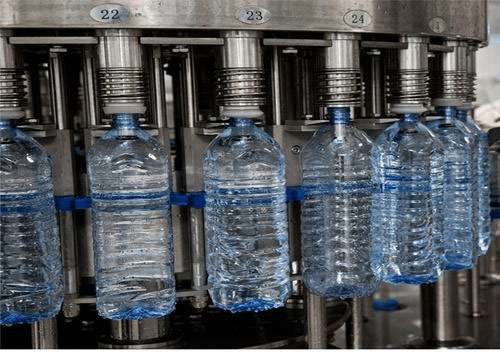
Starting a packaged drinking water business requires much more than purchasing an RO system and bottle filling machine.
A commercial production facility connects water treatment, hygienic storage, bottle handling, filling, capping, labeling, packaging, quality control and finished-product movement into one coordinated operation.
For a new entrepreneur, the machinery catalogue is often the most exciting part of the project. However, buying equipment too early can create expensive problems later.
What happens if the selected treatment system does not suit the source water?
What if the filling line produces more bottles than the packaging section can handle?
What if the factory does not have enough room for conveyors, maintenance or future expansion?
The best starting point is therefore not:
“Which machine should I buy?”
It is:
“What does my production facility actually need to achieve?”
This guide walks through the major decisions to make before requesting final machinery quotations.
Quick Checklist for Starting a Packaged Drinking Water Business
Before selecting equipment, define:
- Target market
- Water source
- Raw-water quality
- Required finished-water specification
- Daily production target
- Bottle sizes
- Working hours
- Automation level
- Factory space
- Utilities
- Packaging format
- Quality-control requirements
- Applicable approvals and compliance requirements
- Distribution plan
- Future expansion target
Once these points are clear, machinery selection becomes considerably more focused.
Step 1: Define Your Target Market
Start with the customer rather than the machine.
Who will buy your packaged water?
- Possible markets can include:
- Local retail stores
- Supermarkets
- Restaurants
- Hotels
- Offices
- Institutions
- Events
- Distributors
- Industrial facilities
- Regional wholesale networks
Different markets can require different bottle formats and production volumes.
For example, a business serving local retail outlets may have a different production strategy from one supplying a large regional distributor.
Your target market affects almost every later decision.
Step 2: Estimate Realistic Market Demand
Avoid selecting plant capacity based purely on ambition.
Estimate how much product the market can realistically absorb during the early stages of the business.
Consider:
- Number of distributors
- Expected orders per distributor
- Retail demand
- Seasonal demand
- Delivery area
- Competitor presence
- Storage capacity
- Distribution capability
A machine capable of producing thousands of bottles per hour does not create demand by itself.
Production capacity and sales capacity should grow together.
Step 3: Select the Water Source
The source water is one of the foundations of the entire project.
Depending on the location and applicable requirements, the proposed facility may have access to a suitable approved source.
The source affects:
- Treatment design
- Pretreatment requirements
- RO configuration where used
- Operating costs
- Water availability
- Production planning
Do not finalize a treatment system before evaluating the water that will actually enter it.
Step 4: Test the Raw Water
Raw-water analysis should happen early.
Testing can help identify relevant physical, chemical and microbiological characteristics.
Depending on the source and project requirements, important parameters may include:
- TDS
- pH
- Hardness
- Turbidity
- Iron
- Alkalinity
- Chlorides
- Microbiological characteristics
- Other relevant source-specific parameters
The results provide the engineering basis for treatment design.
If you want to understand how individual treatment stages work together, read our mineral water plant process guide.
Step 5: Determine the Required Treatment Process
Once the source-water characteristics are known, the required treatment sequence can be planned.
Depending on the application, this may involve stages such as:
Raw Water → Pretreatment → Media Filtration → Activated Carbon Treatment → Fine Filtration → RO Where Required → Disinfection → Hygienic Storage
The correct sequence depends on water quality and required finished-water characteristics.
This is why copying another plant’s treatment configuration is not always a good approach.
Two businesses producing similar bottles can have very different feed-water conditions.
Step 6: Decide Your Daily Production Target
Next, determine how much packaged water you expect to produce.
Avoid thinking only in litres per hour.
Start with:
Expected sales → daily bottle demand → total water requirement → operating hours
For example, estimate:
- Bottles per day
- Bottle volume
- Total packaged litres per day
- Number of shifts
- Production hours per shift
Then account for operational realities such as cleaning, downtime and production scheduling.
This gives machinery suppliers a much clearer production target.
Step 7: Select Bottle Sizes Before Finalizing the Filling Line
Bottle format has a major effect on bottling machinery.
Common commercial formats may include sizes such as:
- 250 ml
- 500 ml
- 1 litre
- 2 litre
Other selected formats
Your chosen bottle affects:
- Filling speed
- Bottle guides
- Conveyor setup
- Labeling
- Cap selection
- Packaging
- Finished-product storage
- Transportation
If multiple bottle sizes will run on one line, ask the equipment supplier about changeover requirements.
Step 8: Calculate Bottles Per Hour
Suppose your business needs to package a particular volume each day.
Convert that volume into actual bottle quantities.
For example:
8,000 litres in 1-litre bottles = 8,000 bottles
But:
8,000 litres in 500 ml bottles = 16,000 bottles
The water volume is identical, yet the bottle-handling requirement doubles.
This simple calculation has major implications for:
- Filling
- Capping
- Labeling
- Coding
- Packaging
- Labour
Therefore, both litres per hour and bottles per hour matter.
Step 9: Decide the Required Automation Level
Now consider how much manual handling is practical.
A semi-automatic configuration may suit businesses with controlled initial volumes and sufficient labour availability.
An automatic line may make more sense where:
- Bottle quantities are high
- Consistent throughput is important
- Manual transfers need to be reduced
- Multiple machines must operate together
- Future production growth is expected
Automation should follow production needs rather than becoming the starting point.
Our automatic vs semi-automatic water plant comparison explores this decision in detail.
Step 10: Plan the Bottling Workflow
Once water is treated, it must move into the packaging section.
A typical workflow may include:
Treated Water → Bottle Preparation → Rinsing → Filling → Capping → Inspection → Labeling → Coding → Secondary Packaging
Each stage needs enough capacity to support the required finished-product output.
For a detailed explanation, see our mineral water bottling process guide.
Step 11: Match Treatment and Bottling Capacities
This is where many project plans become unbalanced.
Imagine:
Water treatment output: 2,000 litres/hour
Filling demand: 3,000 litres/hour equivalent
Packaging capacity: 1,500 litres/hour equivalent
Even though one machine can theoretically process 3,000 litres per hour, the complete production line cannot continuously achieve that output.
Production should therefore be viewed as:
Treatment → Storage → Filling → Capping → Labeling → Packaging
The slowest practical stage can limit the complete line.
Step 12: Evaluate RO Requirements Properly
If reverse osmosis forms part of the treatment process, do not select it based only on an LPH label.
Important considerations include:
- Feed-water characteristics
- Pretreatment
- Membrane configuration
- Recovery
- Permeate output
- Operating pressure
- Monitoring
- Cleaning
- Maintenance
Our RO system for packaged drinking water guide covers these factors separately so buyers can evaluate treatment proposals more effectively.
Step 13: Plan the Factory Layout
The production area needs more than enough space to physically fit the machines.
A practical layout should consider movement of:
- Raw materials
- Empty bottles
- Caps
- Labels
- Packaging material
- Operators
- Maintenance staff
- Finished products
Space may also be required for:
- Raw-water storage
- Treatment equipment
- Treated-water storage
- Bottling
- Packaging
- Quality-control activities
- Finished goods
- Utility equipment
The workflow should minimize unnecessary movement and crossing between different production activities.
Step 14: Check Utility Requirements
Every major machine needs supporting utilities.
Before installation, identify requirements for:
- Electrical supply
- Water
- Drainage
- Compressed air where required
- Ventilation
- Lighting
- Equipment access
- Cleaning
Do not wait until machinery arrives to discover that the facility cannot support its electrical load or utility requirements.
Ask suppliers for utility specifications during project planning.
Step 15: Understand Applicable Compliance Requirements
A packaged drinking water business must consider the legal, food-safety, environmental and operational requirements applicable to its location and product category.
Requirements can change and may vary by jurisdiction.
Therefore, before investing in machinery or commencing commercial production, verify the current requirements directly with the relevant authorities and qualified compliance professionals.
Depending on the project, areas requiring attention may include:
- Business registration
- Food-related approvals
- Applicable product standards
- Water-source permissions
- Factory requirements
- Environmental permissions
- Packaging and labeling requirements
- Testing requirements
Compliance should be incorporated into project planning rather than treated as paperwork to handle after machinery installation.
Step 16: Plan Quality Control
Quality control is not limited to testing the final bottle.
A commercial facility should define how important parameters will be monitored throughout production.
This can involve:
- Raw-water testing
- Treatment-system monitoring
- Filter and membrane performance checks
- Treated-water monitoring
- Cleaning records
- Packaging checks
- Fill-level inspection
- Cap inspection
- Batch identification
- Finished-product testing as applicable
Good records also help operators identify trends before they become larger operational problems.
Step 17: Plan Labeling and Product Identification
The label does more than carry a logo.
It also needs to support the required product information and traceability.
Before purchasing labeling equipment, confirm:
- Bottle shape
- Bottle diameter
- Label type
- Label dimensions
- Label position
- Required production speed
- Coding location
The bottle, label and labeling machine should be treated as one packaging system.
Step 18: Plan Secondary Packaging
How will finished bottles leave the production line?
Depending on the business model, bottles may be:
- Shrink packed
- Carton packed
- Grouped into multipacks
- Prepared in another suitable distribution format
Secondary packaging capacity should match upstream bottling output.
Otherwise, finished bottles accumulate between filling and packing.
Step 19: Plan Finished-Goods Storage
Production does not end at the packaging machine.
Finished packs need sufficient space before dispatch.
Estimate storage requirements based on:
- Daily production
- Dispatch frequency
- Number of SKUs
- Distributor order patterns
- Inventory strategy
If production significantly exceeds dispatch capacity, storage quickly becomes a hidden constraint.
Step 20: Build a Distribution Plan
A successful water bottling business requires both production and distribution.
Before investing heavily in machinery, understand how finished products will reach customers.
Consider:
- Distribution radius
- Distributor network
- Vehicle requirements
- Delivery frequency
- Product handling
- Storage at distribution points
- Retail margins
- Logistics costs
Water is relatively heavy compared with its selling value, which makes distribution efficiency commercially important.
Step 21: Think About Future Expansion
Your first production line does not have to be your final production line.
Plan for growth by considering:
- Additional treatment capacity
- Larger treated-water storage
- Faster filling
- Additional bottle sizes
- More automated packaging
- Conveyor extensions
- Additional production shifts
Factory layout and utilities can be designed with this possibility in mind.
Leaving an expansion path can be far easier than rebuilding a crowded facility later.
What Information Should You Send to a Machinery Manufacturer?
Before asking for a final proposal, prepare a project brief containing:
- Raw-water analysis
- Source-water details
- Required finished-water output
- Daily production target
- Working hours
- Bottle sizes
- Expected bottles per hour
- Cap type
- Label format
- Packaging method
- Factory dimensions
- Electrical availability
- Automation preference
- Current and future production targets
This gives a mineral water plant manufacturer enough context to discuss an appropriate configuration rather than sending a generic machinery quotation.
Machinery Quotation: What Should Buyers Compare?
Do not compare suppliers using only the final price.
Use a structured comparison.| Evaluation Point | What to Check |
|---|---|
| Treatment Basis | Is it based on your water analysis? |
| Treated-Water Output | What actual output is expected? |
| Bottling Speed | For which bottle size? |
| Automation | Which operations are automatic? |
| Bottle Compatibility | Which formats can run? |
| Changeover | What adjustments are required? |
| Utilities | Electricity, water, air, drainage |
| Materials | Product-contact construction |
| Instrumentation | What is monitored? |
| Packaging | Is downstream equipment included? |
| Installation | What support is provided? |
| Training | Is operator training included? |
| Spare Parts | What is readily available? |
| Expansion | Can capacity increase later? |
Common Mistakes New Water Bottling Businesses Make
Buying Machinery Before Testing Raw Water
Treatment equipment should be selected around the actual feed-water condition.
Choosing Capacity Only by LPH
The complete production line also depends on bottle quantities and packaging speed.
Starting With Too Many Bottle Sizes
Every additional SKU can increase packaging inventory, changeovers and operational complexity.
Ignoring Distribution
A factory producing more water than the sales network can move creates inventory rather than growth.
Underestimating Factory Space
Machine dimensions alone do not include conveyors, maintenance access and product movement.
Ignoring Future Expansion
A low-cost initial layout can become expensive if it prevents later upgrades.
Comparing Only Purchase Price
Maintenance, labour, utilities, consumables and downtime also affect long-term operating economics.
Pre-Purchase Project Checklist
Before ordering machinery, confirm:
- Target market identified
- Distribution plan prepared
- Water source confirmed
- Raw water tested
- Treatment process defined
- Daily production target calculated
- Bottle sizes finalized
- Bottles per hour calculated
- Automation level selected
- Factory layout prepared
- Utilities checked
- Bottling workflow planned
- Packaging format selected
- Compliance requirements verified
- Quality-control plan considered
- Finished-goods storage planned
- Future expansion considered
- Technical quotations compared
If several boxes remain unchecked, the project may not yet be ready for final equipment selection.
Frequently Asked Questions
Conclusion
Starting a packaged drinking water business successfully begins with planning, not machinery purchasing.
First understand your market. Then establish the water source, test its characteristics, calculate realistic production requirements and decide which bottle formats the business needs.
Once those fundamentals are clear, treatment capacity, automation, filling equipment and packaging machinery can be selected around actual operating requirements.
For high-intent buyers, the most useful request to a machinery supplier is therefore not:
“Send your cheapest plant price.”
A stronger project brief says:
“Here is our water analysis, daily production target, bottle range, operating schedule, factory space and expansion plan. Recommend a suitable production configuration.”
That approach gives both the buyer and equipment manufacturer a clearer foundation for designing a practical packaged drinking water production facility.
Ready to build or scale your Mineral Water Manufacturing Unit?
Explore our complete Mineral Water Plant solutions engineered for high-efficiency performance. For expert guidance on layout design and custom machinery requirements, contact our engineering team today.
 Users Today : 1
 Users This Month : 1330
 Total Users : 1331