
Water entering a bottling facility is not simply passed through one filter and sent directly to the filling machine.
Commercial treatment normally involves multiple water purification stages, with each stage designed to address particular characteristics of the incoming water or prepare it for the next treatment step.
A typical treatment sequence may include pretreatment, media filtration, activated carbon treatment, fine filtration, reverse osmosis where required, disinfection and hygienic treated-water storage.
The exact process should not be identical for every facility.
Why?
Because raw water can vary significantly according to its source and location.
The most appropriate treatment sequence should therefore begin with understanding the incoming water rather than copying a standard list of machines.
This guide explains the major purification stages used before commercial water bottling and, more importantly, why each stage exists.
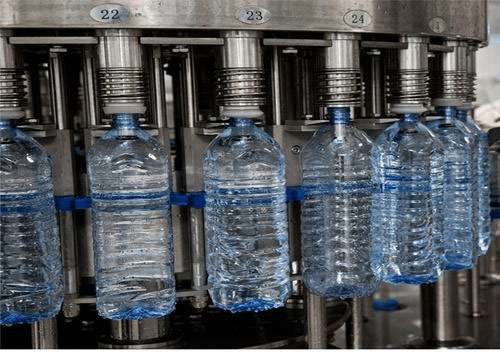
Water Purification Stages at a Glance
A simplified commercial treatment sequence may look like:
Raw Water → Pretreatment → Media/Sand Filtration → Activated Carbon Treatment → Micron Filtration → RO Where Required → Disinfection → Hygienic Treated-Water Storage → Bottling
Each stage has a different job.
For example:
Media filtration primarily addresses suspended material and turbidity.
Activated carbon can be used for specific adsorption and conditioning purposes.
Fine filtration provides additional particulate control.
Reverse osmosis can reduce many dissolved substances.
Disinfection addresses microbiological control.
Hygienic storage helps protect treated water before filling.
The actual configuration depends on raw-water characteristics and required finished-water quality.
Why Is Raw-Water Testing the First Step?
Before deciding which purification equipment is required, the source water should be evaluated.
Raw water can come from different sources and may contain varying levels of:
- Suspended solids
- Dissolved minerals
- Hardness
- Turbidity
- Iron
- Chlorides
- Organic matter
- Microorganisms
- Other source-specific constituents
A treatment system designed without understanding these characteristics may contain unnecessary stages or fail to address important feed-water conditions.
This leads to a fundamental principle:
Test first. Design second. Buy equipment third.
Stage 1: Raw-Water Collection and Storage
The purification process begins with the incoming water.
Depending on the facility design, raw water may first enter a storage tank before treatment.
This provides a controlled supply to downstream equipment and can help stabilize plant operation.
Important considerations include:
- Suitable tank construction
- Protection from external contamination
- Appropriate cleaning
- Controlled inlet and outlet
- Proper piping
- Prevention of unnecessary stagnation
Raw-water storage itself is not a purification process, but it establishes the starting point for controlled treatment.
Stage 2: Pretreatment
Pretreatment prepares raw water for the main purification stages.
Its exact design depends heavily on water analysis.
Pretreatment may address issues such as:
- Suspended material
- Hardness
- Iron
- Turbidity
- Scaling potential
- Oxidants
- Other feed-water characteristics
This stage is especially important when sensitive downstream technologies such as reverse osmosis membranes are used.
Pretreatment should therefore not be viewed as a collection of optional accessories.
It helps create suitable feed conditions for the purification equipment that follows.
Stage 3: Sand or Media Filtration
One of the early filtration stages in many treatment systems is media filtration.
A media filter passes water through selected filtration media to reduce suspended particles and turbidity.
Depending on the design, the filter may use layers of suitable media.
What Does Media Filtration Help Remove?
Its role may include reducing:
- Suspended solids
- Sediment
- Visible particulate matter
- Turbidity
Removing these materials early helps protect downstream equipment.
Why Is This Stage Important?
Imagine sending visibly turbid water directly toward fine filters or membranes.
The downstream components would have to handle material that could have been removed more efficiently earlier.
Media filtration therefore acts as a front-line particulate barrier within the treatment sequence.
Stage 4: Activated Carbon Treatment
After initial filtration, water may pass through an activated carbon filtration stage where appropriate.
Activated carbon has a highly porous structure that provides a large surface area for adsorption.
Depending on feed-water conditions and process design, activated carbon treatment can help address certain:
- Organic compounds
- Taste-related substances
- Odour-related substances
- Chlorine or other oxidants where applicable
Its exact role depends on the incoming water and treatment strategy.
Why Activated Carbon Matters Before RO
Stage 5: Fine or Micron Filtration
After larger suspended particles have been addressed, water may pass through finer filtration.
Cartridge or micron filters are commonly used as a polishing and protective stage before sensitive downstream equipment.
Their purpose is to capture smaller particulate material that may remain after earlier treatment.
This can help protect:
- RO membranes
- Pumps
- Valves
- Downstream piping
- Other treatment components
The appropriate filtration rating should be selected as part of the overall process design rather than simply choosing the smallest available filter.
Why Use Multiple Filtration Stages?
A common buyer question is:
“Why not use one very fine filter from the beginning?”
Because treatment works more efficiently when different stages handle different types and sizes of contaminants.
A simplified approach is:
Coarser Treatment → Finer Treatment → Membrane Treatment → Disinfection
Each stage reduces the burden on the next.
This layered approach can improve operating stability and make maintenance more manageable.
Stage 6: Reverse Osmosis Where Required
Reverse osmosis is different from conventional particulate filtration.
Instead of simply trapping visible particles, RO uses pressure and a semi-permeable membrane to separate water from a significant portion of dissolved substances.
RO can be particularly useful where the treatment objective requires reduction of dissolved ionic constituents.
The system produces:
Permeate
The treated stream passing through the membrane.
Concentrate
The stream carrying a higher concentration of substances rejected by the membrane.
RO system design depends on feed-water characteristics, pretreatment and required treated-water quality.
For a deeper explanation of membrane selection, pretreatment, recovery and operating factors, read our RO system for packaged drinking water guide.
What Can Reverse Osmosis Reduce?
Depending on membrane type and operating conditions, RO can significantly reduce many dissolved substances.
Performance depends on factors such as:
- Feed-water composition
- Membrane characteristics
- Operating pressure
- Temperature
- Recovery
- Membrane condition
- Pretreatment performance
This is why RO should not be discussed simply as a machine that “removes everything.”
It is a treatment technology with specific operating characteristics and limitations.
Stage 7: Post-RO Treatment
Water leaving an RO system may require additional treatment depending on the required finished-water characteristics and process design.
The appropriate post-treatment steps should be determined by:
- Finished-water requirements
- Water chemistry
- Process objectives
- Applicable requirements
- Packaging application
This stage should be engineered around the final product rather than copied from another facility.
Stage 8: Disinfection
Filtration and membrane treatment should not be confused with complete microbiological control.
A commercial treatment process may therefore include an appropriate disinfection stage.
Technologies used in water treatment can include methods such as:
- Ultraviolet treatment
- Ozone-based treatment
- Other appropriately designed disinfection processes
The selected method depends on system design and required water quality.
Why Is Disinfection a Separate Stage?
Different treatment technologies solve different problems.
A sand filter primarily addresses suspended particles.
RO primarily addresses many dissolved constituents.
Disinfection is focused on microbiological control.
That is why a well-designed water treatment system usually relies on a treatment train, not one magical machine.
UV Treatment in Water Purification
Ultraviolet systems expose water to UV energy at an appropriate wavelength and dose to inactivate susceptible microorganisms.
The effectiveness of a UV system depends on factors such as:
- Water clarity
- UV transmittance
- Lamp condition
- Flow rate
- Equipment design
- Maintenance
UV does not function as a particulate filter and does not remove dissolved minerals.
Step 17: Plan Labeling and Product Identification
Ultraviolet systems expose water to UV energy at an appropriate wavelength and dose to inactivate susceptible microorganisms.
The effectiveness of a UV system depends on factors such as:- Water clarity
- UV transmittance
- Lamp condition
- Flow rate
- Equipment design
- Maintenance
Ozone in Bottled Water Treatment
Ozone may be used in certain commercial water treatment and bottling applications as part of a properly engineered disinfection strategy.
Its use requires appropriate:
- Generation
- Dosing
- Contact
- Monitoring
- Process control
Like every treatment technology, ozone should be selected according to the actual process requirement rather than simply added because another plant uses it.
Stage 9: Hygienic Treated-Water Storage
Once water has completed the required treatment stages, it may enter a hygienic storage system before filling.
At this point, the objective changes.
Earlier stages were focused on improving water quality.
Now the priority becomes protecting the treated water until packaging.
Important considerations can include:
- Suitable product-contact materials
- Hygienic tank design
- Protected openings
- Appropriate cleaning
- Controlled transfer
- Suitable piping
- Prevention of unnecessary contamination opportunities
Poor post-treatment handling can undermine the work performed by the purification system.
Stage 10: Transfer to the Bottling Line
Treated water then needs to move from storage to the filling equipment through an appropriately designed transfer system.
The path should minimize opportunities for contamination and unnecessary stagnation.
From this point onward, the focus shifts from water purification to product packaging.
The downstream sequence may include:
Bottle Rinsing → Filling → Capping → Inspection → Labeling → Coding → Packaging
Our mineral water bottling process guide explains those post-treatment stages separately.
Keeping these topics separate is useful because purification and packaging solve different production challenges.
What Is the Difference Between Filtration, RO and Disinfection?
Your first production line does not have to be your final production line.
Plan for growth by considering:
- Additional treatment capacity
- Larger treated-water storage
- Faster filling
- Additional bottle sizes
- More automated packaging
- Conveyor extensions
- Additional production shifts
Factory layout and utilities can be designed with this possibility in mind.
Leaving an expansion path can be far easier than rebuilding a crowded facility later.
What Information Should You Send to a Machinery Manufacturer?
These terms are sometimes used as if they mean the same thing.
They do not.| Treatment Type | Primary Role |
|---|---|
| Media Filtration | Reduce suspended material and turbidity |
| Activated Carbon | Adsorption and conditioning for selected substances |
| Micron Filtration | Fine particulate control |
| Reverse Osmosis | Reduce many dissolved substances |
| UV | Microbiological inactivation |
| Ozone | Disinfection/oxidation in appropriate applications |
Why Treatment Order Matters
The order of purification equipment is not random.
Upstream stages often protect downstream equipment.
For example:
Media Filtration → Fine Filtration → RO
Removing larger particulate matter before fine filtration reduces the load on smaller filters.
Fine filtration before RO can provide additional protection for membrane equipment.
Similarly, appropriate pretreatment can help manage feed-water conditions that could otherwise affect membrane performance.
The treatment train should therefore be designed as a connected system.
Can You Skip a Purification Stage?
There is no universal answer.
A stage should exist because the raw-water condition or process requirement justifies it.
If source water does not require a particular treatment step, adding unnecessary equipment can increase:
- Capital cost
- Maintenance
- Consumables
- Pressure loss
- Operational complexity
On the other hand, removing a necessary treatment stage can compromise downstream performance.
This is why water analysis should drive treatment selection.
Purification Process vs Complete Mineral Water Plant Process
These two topics are related but not identical.
The water purification process focuses specifically on improving and controlling water quality before packaging.
A complete production facility includes additional operations such as:
- Bottle handling
- Rinsing
- Filling
- Capping
- Labeling
- Coding
- Packaging
- Finished-product movement
For the broader plant-level workflow, see our complete mineral water plant process guide.
This article intentionally focuses only on the purification side of production.
Frequently Asked Questions
Conclusion
Commercial water purification works best as a sequence of purposeful treatment stages rather than a collection of unrelated machines.
Each of the major water purification stages performs a different role.
Media filtration can address suspended matter. Activated carbon can provide adsorption and conditioning for selected substances. Fine filtration protects downstream equipment. Reverse osmosis can reduce many dissolved constituents. Disinfection provides microbiological control, while hygienic storage helps protect treated water before filling.
The most important principle is simple:
Do not start with the machine list. Start with the water.
Test the source water, identify the treatment requirements and then select equipment that addresses those requirements in a logical sequence.
For buyers planning a commercial water production facility, understanding why each purification stage exists makes it much easier to evaluate equipment proposals, compare treatment designs and discuss the project intelligently with a manufacturer.
Ready to build or scale your Mineral Water Manufacturing Unit?
Explore our complete Mineral Water Plant solutions engineered for high-efficiency performance. For expert guidance on layout design and custom machinery requirements, contact our engineering team today.
 Users Today : 5
 Users This Month : 1334
 Total Users : 1335